• Inicio
  • ¿Cómo Apoyar?
  • Quiénes somos
  • Noticias y Comunicados
  • Nuestros Programas
  • Más
    • Inicio
    • ¿Cómo Apoyar?
    • Quiénes somos
    • Noticias y Comunicados
    • Nuestros Programas
  • Iniciar sesión

  • Mi cuenta
  • Iniciaste sesión como:

  • filler@godaddy.com


  • Mi cuenta
  • Cierra sesión

Dona Ahora

Iniciaste sesión como:

filler@godaddy.com

  • Inicio
  • ¿Cómo Apoyar?
  • Quiénes somos
  • Noticias y Comunicados
  • Nuestros Programas

Cuenta

  • Mi cuenta
  • Cierra sesión

  • Iniciar sesión
  • Mi cuenta
Dona Ahora

Keeping the Chinampas Alive: Rooted in Xochimilco’s Future

(IAX)

Iniciativa Agroecológica Xochimilco, A.C.


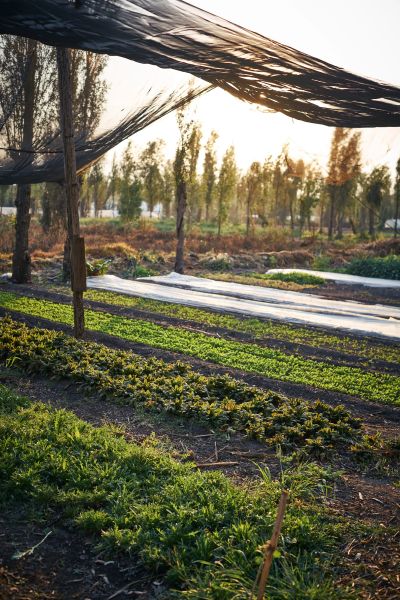
We are a nonprofit organization working for the biocultural restoration of the chinampas of Xochimilco, Mexico City, by strengthening the people, knowledge, livelihoods, and ecological processes that keep this living agricultural landscape alive.
Discover two of our current programs:

Mujer Medicina

Applied Research in Chinampa Agroecology for Climate Resilience

Applied Research in Chinampa Agroecology for Climate Resilience

Women regenerating chinampas through medicinal agroforestry, economic autonomy, and community leadership. 

Explore Mujer Medicina

Applied Research in Chinampa Agroecology for Climate Resilience

Applied Research in Chinampa Agroecology for Climate Resilience

Applied Research in Chinampa Agroecology for Climate Resilience

Researching how agroecological management can strengthen climate resilience while sustaining the ecological and cultural functions of the chinampa landscape.

Explore Applied Research

Mujer Medicina

Regenerating chinampas by strengthening the women who care for life, plants, water, and community.


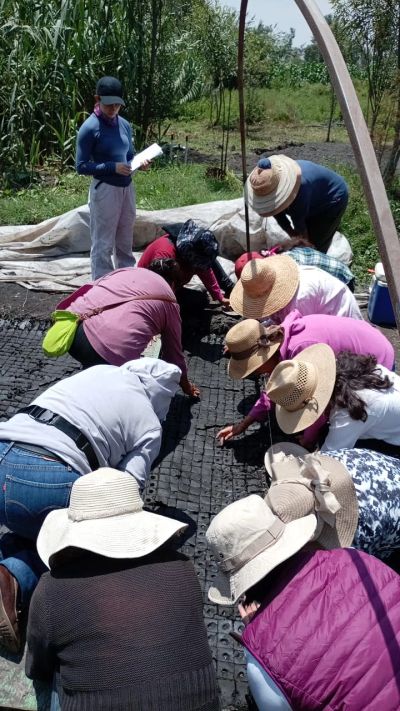
Mujer Medicina is a 12-month, women-led program that connects medicinal agroforestry, herbal processing, entrepreneurship, and community organization to strengthen women’s economic autonomy while reactivating chinampa land.

The program works with 25 women from Xochimilco, particularly caregivers, heads of household, and women with limited access to training, support networks, and income opportunities.

Through a practical learning pathway, participants develop the tools to grow, process, organize, market, and share knowledge around medicinal and aromatic plants.


What women build through the program


  • Agroecological skills: practical experience in medicinal agroforestry, soil regeneration, water stewardship, biodiversity, and chinampa management.
  • Herbal knowledge and processing: cultivation, harvesting, dehydration, handling, and transformation of medicinal and aromatic plants into value-added products.
  • Entrepreneurial capacity: costing, pricing, marketing, customer validation, negotiation, and basic financial planning.
  • Economic autonomy: realistic supplementary-income pathways adapted to women’s available time and care responsibilities.
  • Leadership and collective organization: confidence, decision-making, peer support, and stronger women-led community networks.
  • Productive restoration: direct participation in the recovery of a chinampa through regenerative production.
  • Replication capacity: each participant prepares to share what she learns with at least three other women in her own network.

A model that connects women and territory

Mujer Medicina is not only a training program.

 It creates a complete pathway from learning to production, from plants to products, and from individual participation to collective leadership.


The program includes:

  • a medicinal and aromatic agroforestry system;
  • a collective herbal dehydration module;
  • training in regenerative agronomy and water management;
  • business and financial skills;
  • women’s support groups and psychosocial accompaniment;
  • and tools for participants to reproduce the model within their communities.


By the end of the program, the goal is to leave behind both tangible productive infrastructure and lasting human capacities.

Why it matters for Xochimilco

Chinampas are living agricultural wetlands whose continuity depends on everyday care, local knowledge, biodiversity management, and community organization.

Women already sustain much of this work, although their contribution is often undervalued or economically invisible.


Mujer Medicina turns that knowledge into recognized skills, productive opportunities, stronger support networks, and practical climate action.

A reactivated chinampa can once again support:


  • healthy soils;
  • efficient water management;
  • high biodiversity;
  • vegetation and carbon storage;
  • family economy;
  • and the transmission of traditional knowledge.

Support Mujer Medicina


You can also support Mujer Medicina by purchasing herbal products made by the women participating in the program. Our dried medicinal and aromatic products are available for international shipping. 

To learn more, place an order, or explore wholesale opportunities, please contact us at lucio@iaxmx.org.


Your contribution can help women turn care knowledge into economic autonomy, chinampa restoration, and community climate resilience.

Support can take the form of:

  • financial donations;
  • equipment and materials;
  • technical expertise;
  • market connections;
  • mentoring;
  • or strategic partnerships.

Donate through 1% for the Planet

Applied Research in Chinampa Agroecology for Climate Resilie

A living agroecological system for a changing climate UNESCO World Heritage Site · Ramsar Site · FAO

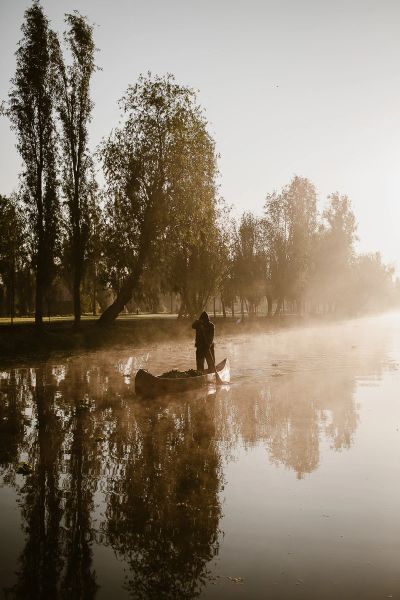
For centuries, the chinampas of Xochimilco have transformed a lake environment into a unique agricultural landscape shaped by the interaction of soil, water, vegetation, farming knowledge, and human labor.

Chinampas form a living biocultural system of raised fields, canals, apantles—small secondary canals—trees, crops, wildlife, livelihoods, and traditions.

Today, this system persists within Mexico City while facing increasing pressure from water degradation, urbanization, land-use change, soil stress, climate variability, declining agricultural profitability, and weakening generational succession.

These pressures threaten not only food production, but also the people and practices that maintain the landscape itself.

Why the chinampas matter

 A functioning chinampa landscape contributes far beyond the boundaries of individual farms. 


It supports:


  • food production and local livelihoods;
  • water infiltration and circulation;
  • carbon storage in soils and vegetation;
  • habitat and biodiversity;
  • local climate regulation;
  • and the continuity of a globally significant living agricultural heritage.


The future of the chinampas is therefore inseparable from the future of the people who manage them.

What we do


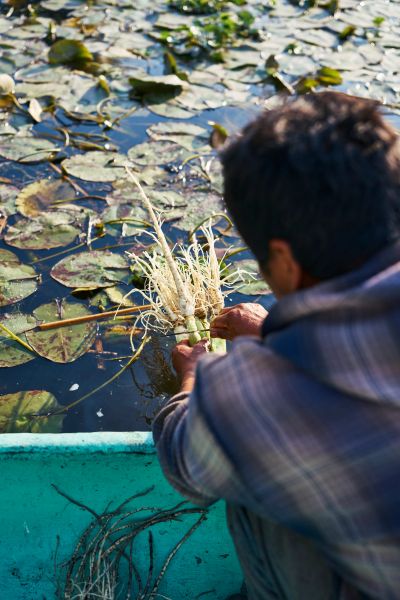
The Applied Research in Chinampa Agroecology for Climate Resilience Program combines scientific research, local knowledge, and field-based collaboration with chinamperos.

Our first research phase, supported in part by World Monuments Fund through its Cultivating Resilience program, developed a series of socioecological diagnostic studies across contrasting forms of chinampa management and land use.


Together with producers and technical partners, we have studied:


soil · water · carbon · woody vegetation · agrobiodiversity · agricultural production · cultural values · climate risks · management practices


Our objective is to understand which forms of management help keep chinampas productive, ecologically functional, and culturally alive.

What the evidence is telling us

  • Active agricultural management matters: traditional agroecological and syntropic-regenerative systems showed the broadest climate-relevant portfolios of ecosystem functions among the management types studied.
  • Chinampa soils store substantial carbon: agroecologically managed soils showed higher organic matter than highly transformed land uses.
  • Woody vegetation is part of the system’s climate infrastructure: our study recorded 3,022 woody individuals representing 37 species across 15 chinampas.
  • Ahuejotes remain ecologically central: this native willow was the dominant contributor to standing woody carbon in the sampled landscape.
  • Apantles may help improve water quality: monitoring suggests that these small canals can contribute to ecological filtering within the wetland system.
  • Soil biology responds to management: preliminary evidence shows distinctive microbial communities and greater biological continuity under agroecological management.
  • Heritage depends on practice: cultural mapping confirms that chinampa resilience depends on the continued transmission of farming knowledge, water management, family histories, and local identity.

From evidence to action

Our research points to a fundamental idea:


Agriculture and ecosystem conservation are not competing objectives in the chinampa landscape. Appropriate farming and land management are part of what keeps the ecosystem functioning.

The next phase of research will deepen this evidence.


We want to understand:

  • how carbon stocks change under different management and land-use trajectories;
  • how soil microbial communities contribute to nutrient cycling, soil health, and resilience;
  • how trees and agroforestry systems store and cycle carbon;
  • how apantles influence water quality;
  • which ecosystem services can be reliably measured;
  • and how those services could eventually support public or private incentive mechanisms for chinampero stewardship.


At the same time, we aim to work directly with producers to test practices that improve water management, soil health, agrobiodiversity, climate adaptation, and economic viability.


Our long-term vision is for productive chinampa management to be recognized not only as agriculture, but as stewardship of water, biodiversity, climate regulation, and living cultural heritage.

Help us move from evidence to action

We are looking for partners who can contribute through:

  • research funding;
  • scientific equipment and technology;
  • technical expertise;
  • access to data;
  • institutional partnerships;
  • policy connections;
  • and support for direct work with chinamperos.

Every contribution helps transform preliminary evidence into measurable, practical, and scalable solutions. 

No chinamperos, no chinampas.

Because protecting the chinampas means supporting the people who keep them alive. 

Donate through 1% for the Planet
  • Noticias y Comunicados
  • Nuestros Programas
  • Aviso de Privacidad
  • Climate Week

IAX

Copyright © 2026 IAX - IAX, Iniciativa Agroecológica Xochimilco, A.C. es una asociación civil mexicana sin fines de lucro y donataria autorizada por el Servicio de Administración Tributaria (SAT). Fundada en 2014 en Xochimilco, Ciudad de México. Contacto: contacto@iaxmx.org

Política de cookies

Este sitio web utiliza cookies. Al seguir utilizando este sitio aceptas, nuestro uso de cookies.

Aceptar y cerrar